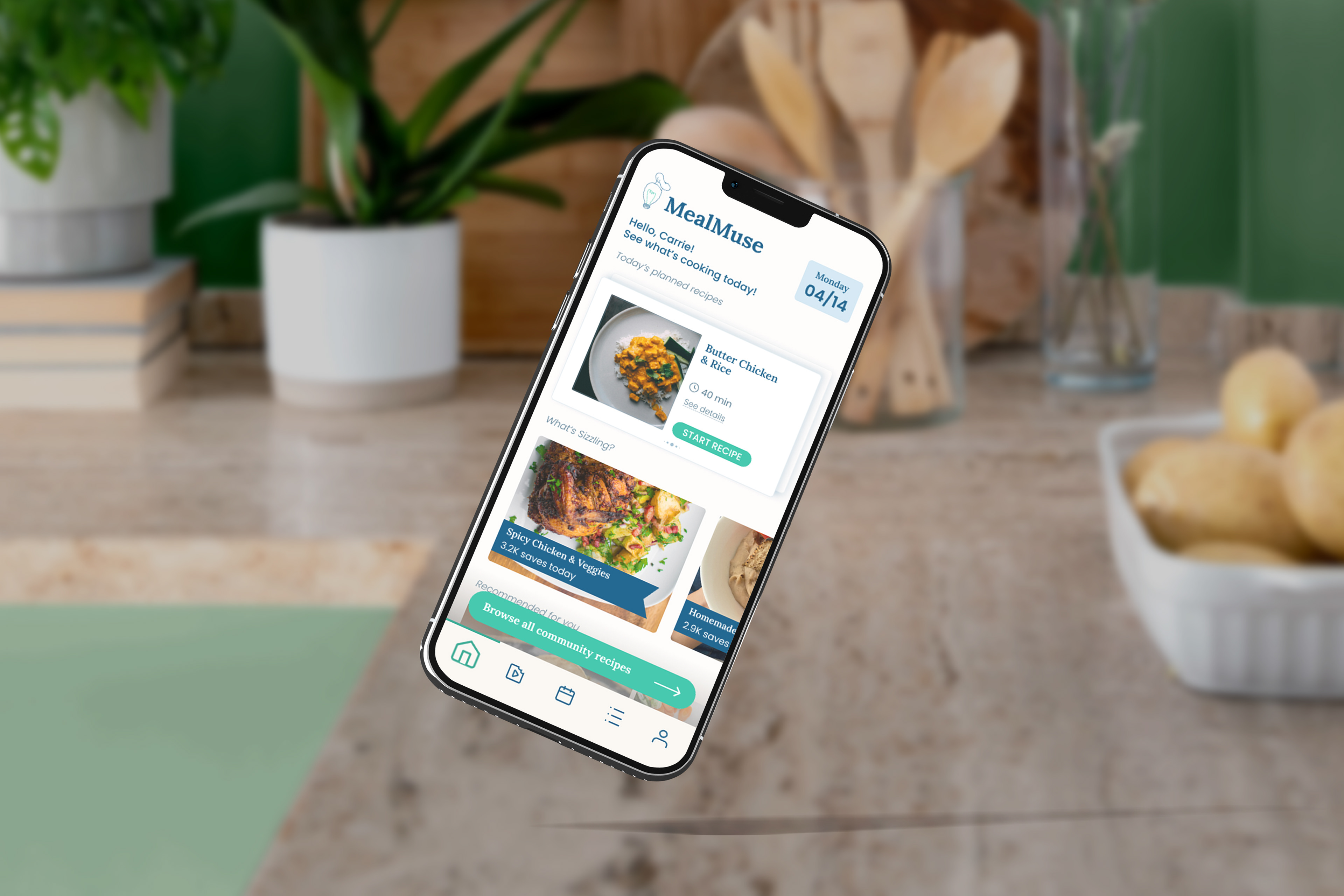
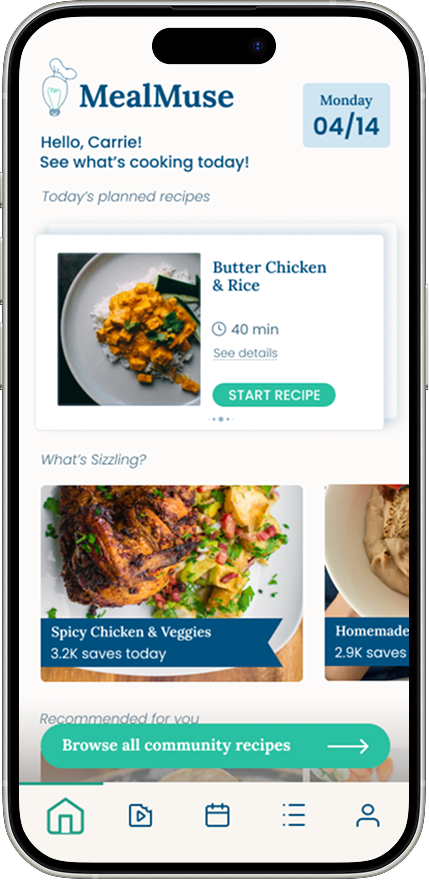
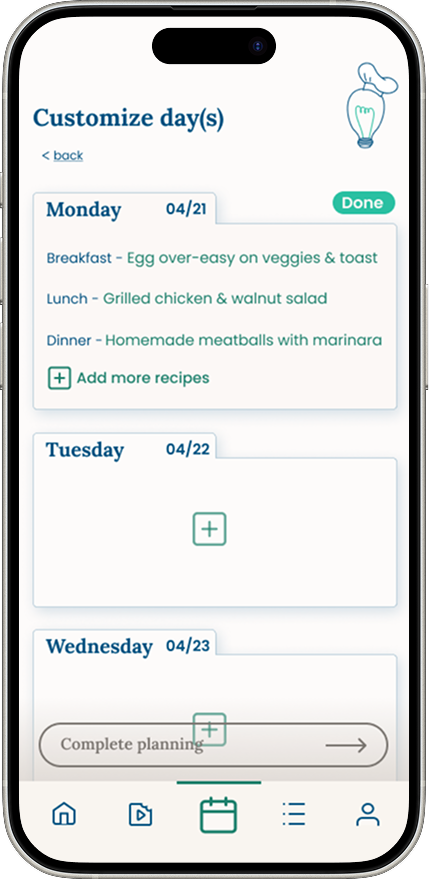
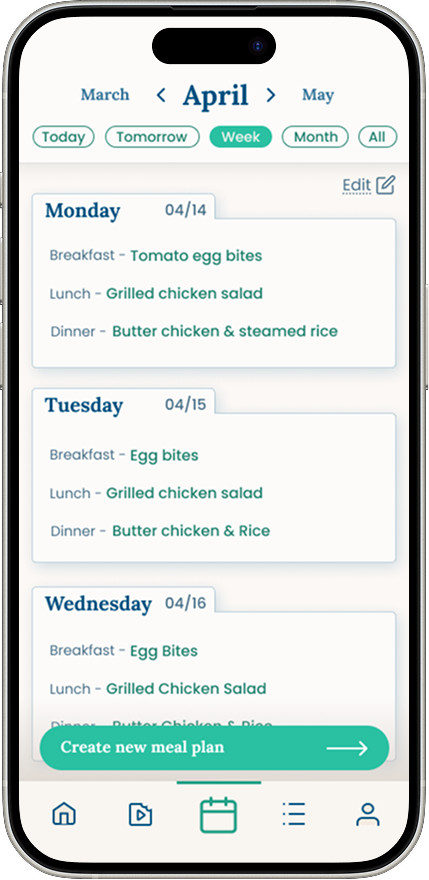
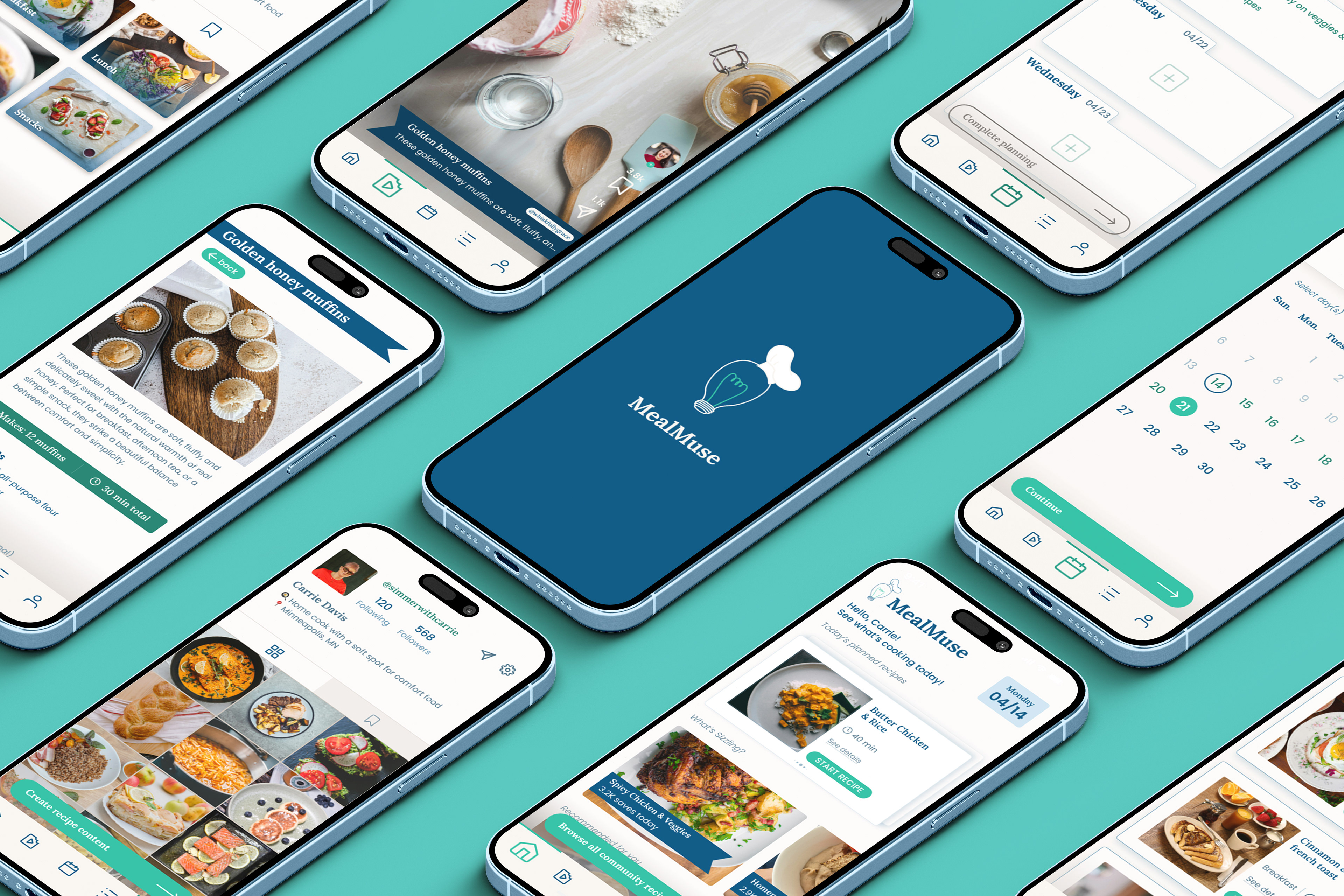
Meal Muse is a UX and UI concept I developed to reimagine how people discover, plan, and cook meals. The idea centers around short, scrollable, step by step video tutorials inspired by social media platforms, allowing users to quickly explore recipes in a format that feels familiar and engaging. Instead of passively saving recipes, users interact with content, create their own videos, and build a personalized collection of meals they are genuinely excited to try.
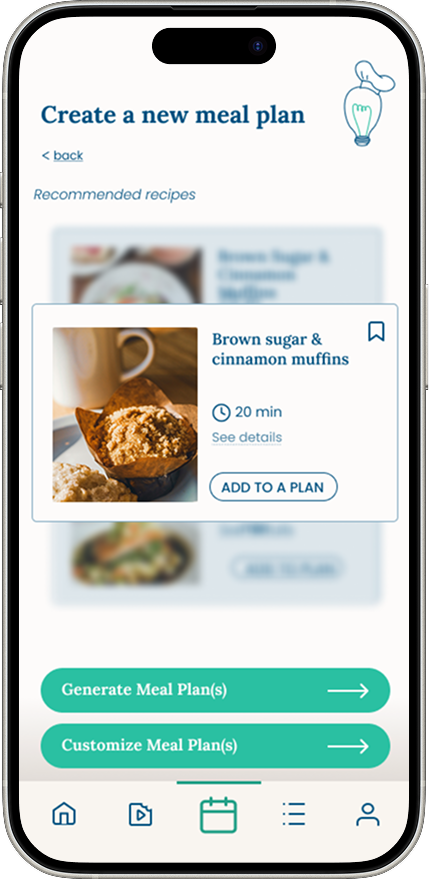
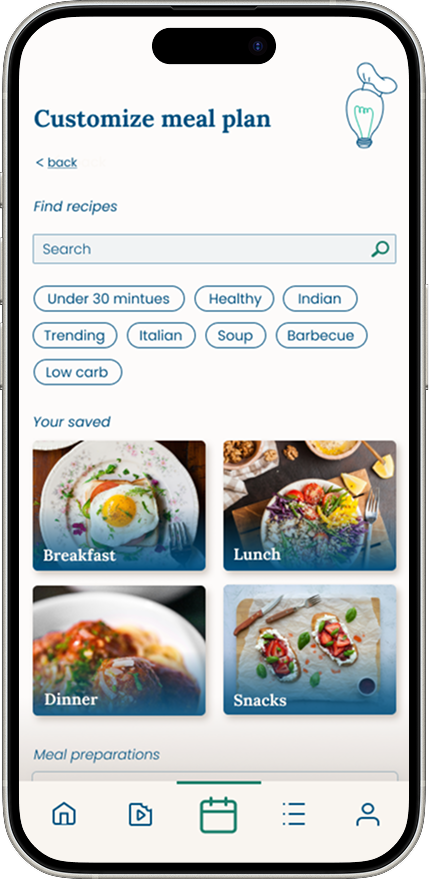
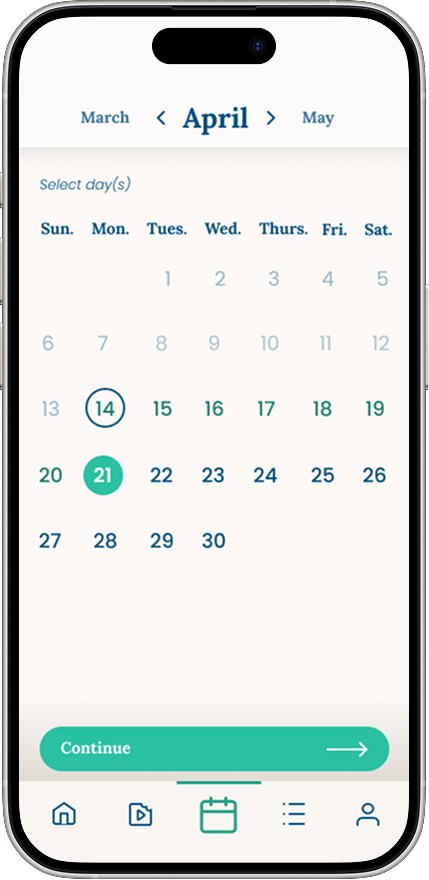
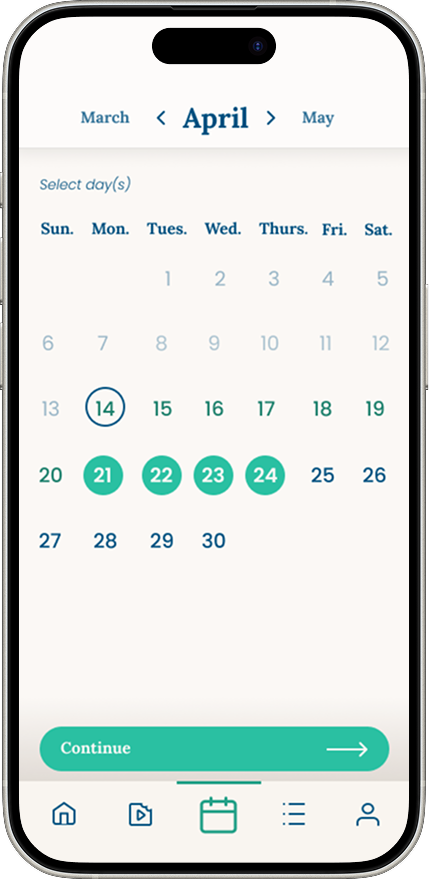
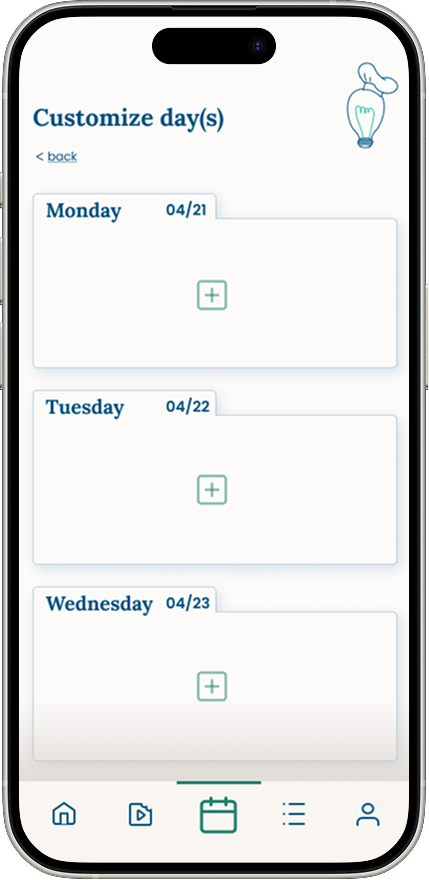
Each video connects to a clear, structured recipe page, bridging the gap between quick inspiration and practical execution. The concept also includes a smart meal planner that generates a weekly plan based on recipes users like and save. Meals can be swapped seamlessly, helping users create a flexible plan that fits their lifestyle.
Meal Muse is designed as a solution focused on reducing friction, increasing consistency, and making cooking feel approachable through thoughtful interaction design and personalization.
Overview
- Conducted user research through surveys and interviews
- Created user personas based on research insights
- Designed user flows to map out the user journey
- Produced wireframes (hand-sketched and in Figma)
- Built interactive prototypes to visualize the experience
- Conducted usability testing to validate and refine the design
Conducting a Screener Survey
Before designing Meal Muse, I conducted a survey to better understand how people approach cooking and meal planning in their daily lives. Using a Google Forms survey with multiple-choice questions, I gathered 188 responses. The insights helped shape key design decisions and ensured the concept was grounded in real user behaviors and challenges.
Several questions revealed strong patterns, with the majority of respondents selecting the same answers. Here are the key findings:
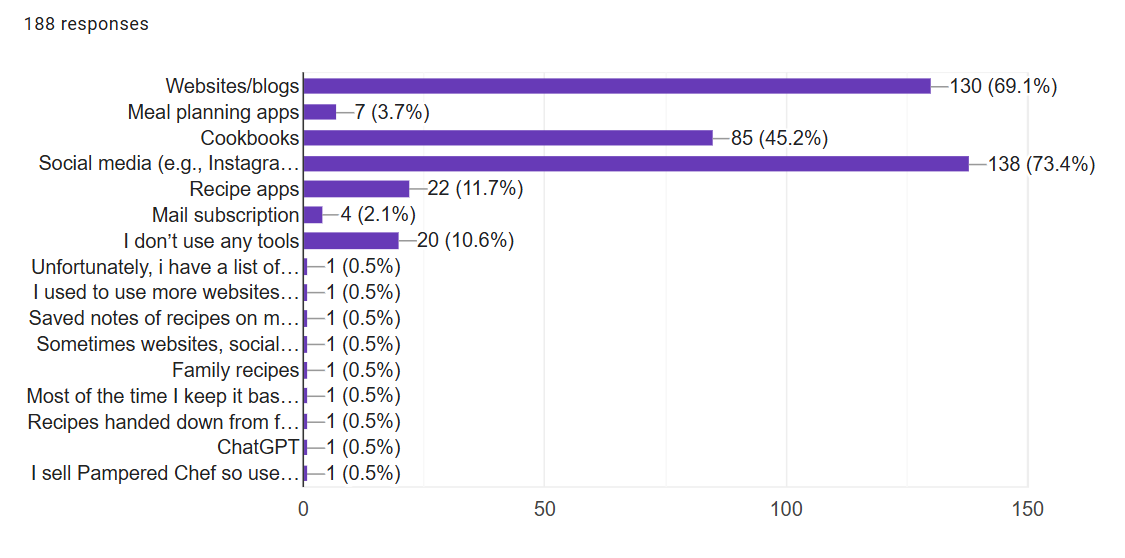
What tools or methods do you currently use to find recipes or plan meals?
Nearly 100% of respondents use some form of media (apps, websites, videos, etc.) to find recipes.
Nearly 100% of respondents use some form of media (apps, websites, videos, etc.) to find recipes.
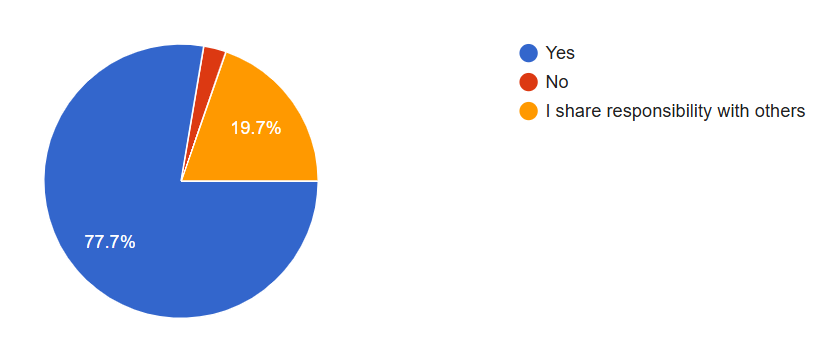
Are you responsible for meal planning and grocery shopping in your household?
77.7% are responsible for both cooking and grocery shopping
77.7% are responsible for both cooking and grocery shopping
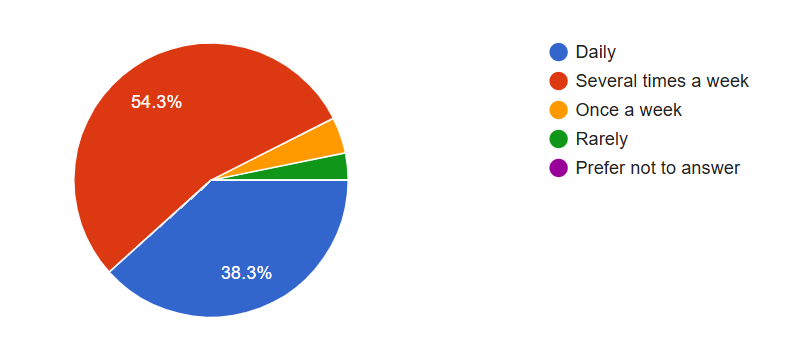
How often do you cook meals at home?
54.3% cook several times a week
54.3% cook several times a week
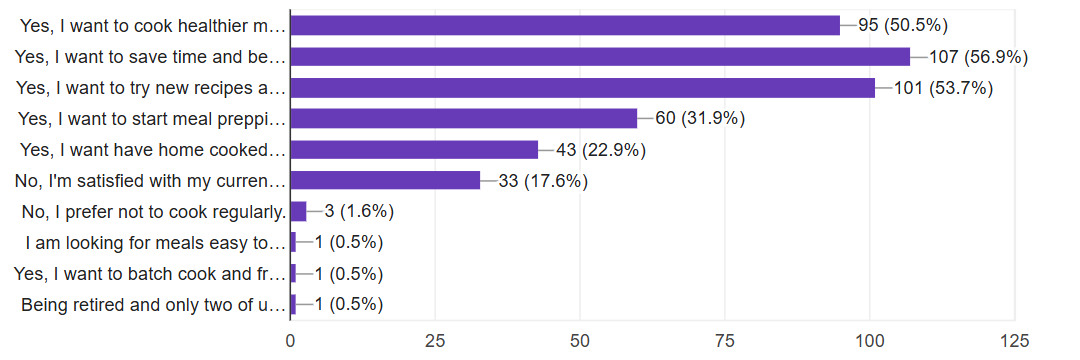
Are you interested in improving your cooking habits? (Select all that Apply)
Majority of people Said they want to improve their cooking habits in some way.
Majority of people Said they want to improve their cooking habits in some way.
Survey Conclusion
Conducting this survey allowed me to identify a clear opportunity for a solution like Meal Muse. The results showed consistent challenges around cooking and meal planning, indicating that users would not only use an app like this, but genuinely benefit from it.
User Interviews
I conducted three user interviews with participants aged 23, 32, and 55 to understand motivations and challenges related to meal planning across different life stages. I used open-ended questions to explore their values, routines, and cooking priorities.
Key Findings:
Cooking holds different levels of importance depending on life stage and personal priorities.
Cooking holds different levels of importance depending on life stage and personal priorities.
The 32-year-old participant focuses on preparing nutritious meals for her children.
The 55-year-old participant cooks primarily to support personal health and well-being.
Design Implications:
These insights showed that Meal Muse must be versatile, supporting both family-focused users and individuals cooking for personal needs. The app should offer flexible meal planning tools that reduce stress and adapt to a wide range of lifestyles.
These insights showed that Meal Muse must be versatile, supporting both family-focused users and individuals cooking for personal needs. The app should offer flexible meal planning tools that reduce stress and adapt to a wide range of lifestyles.
USER PERSONAS
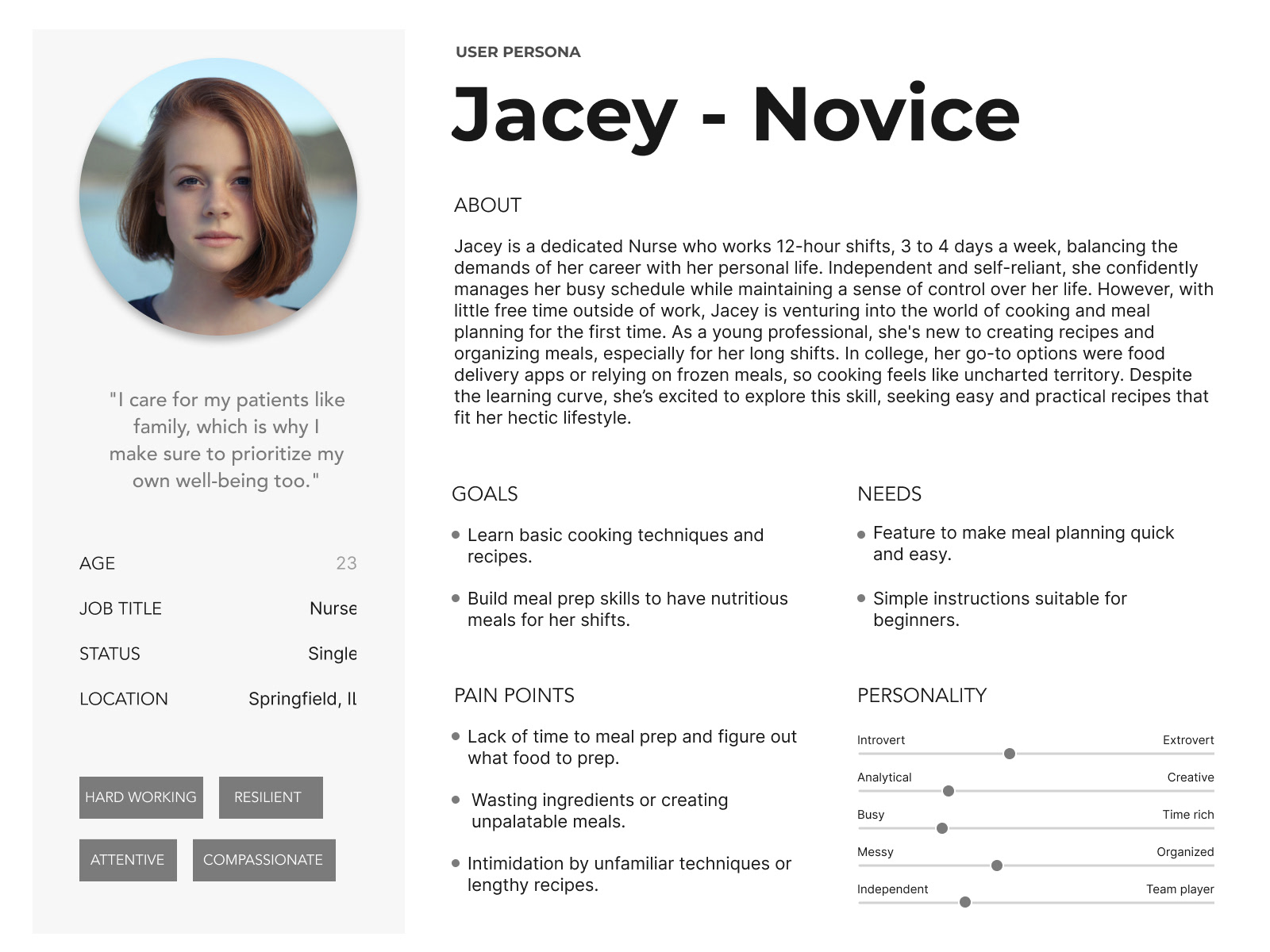
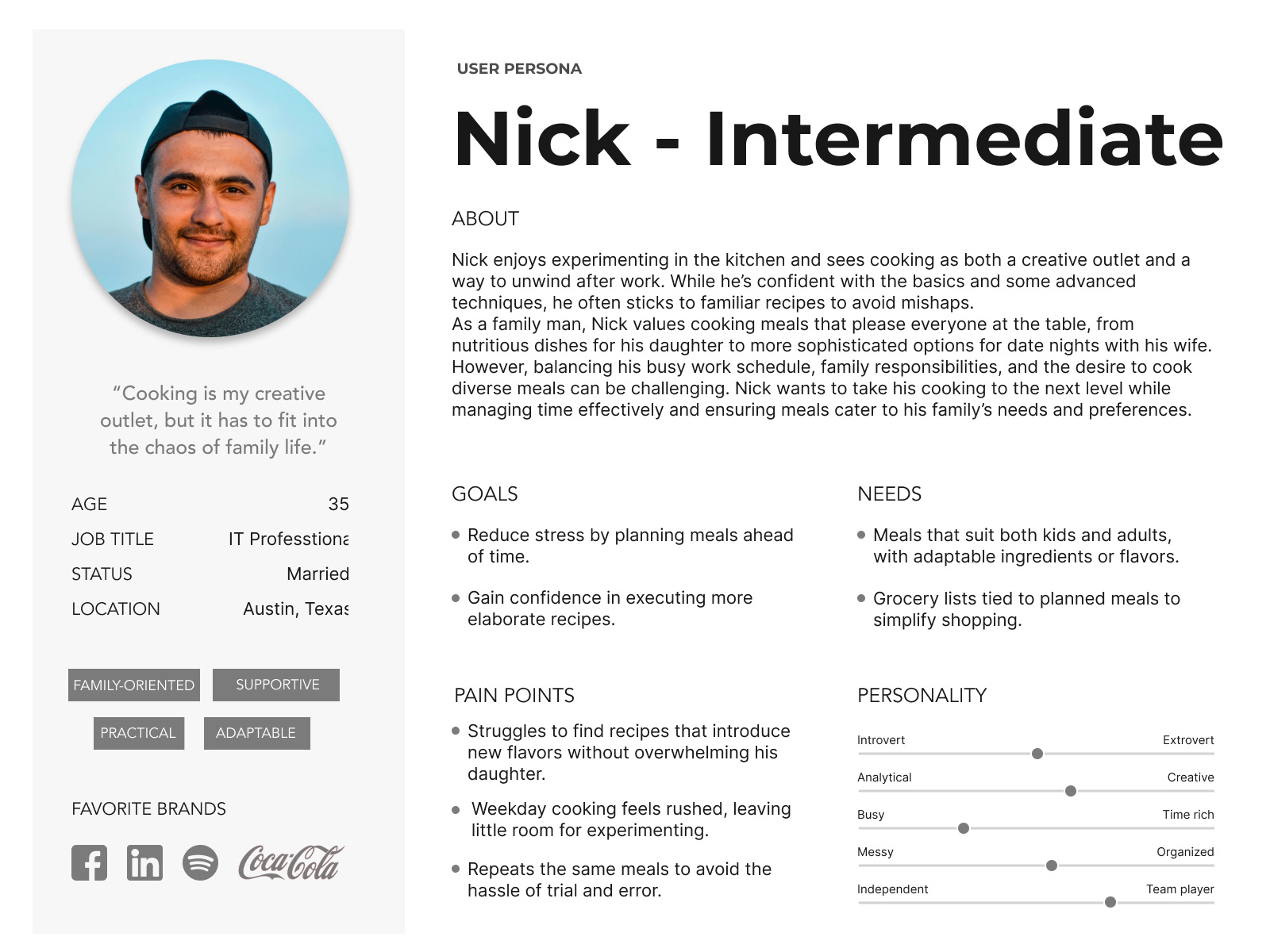
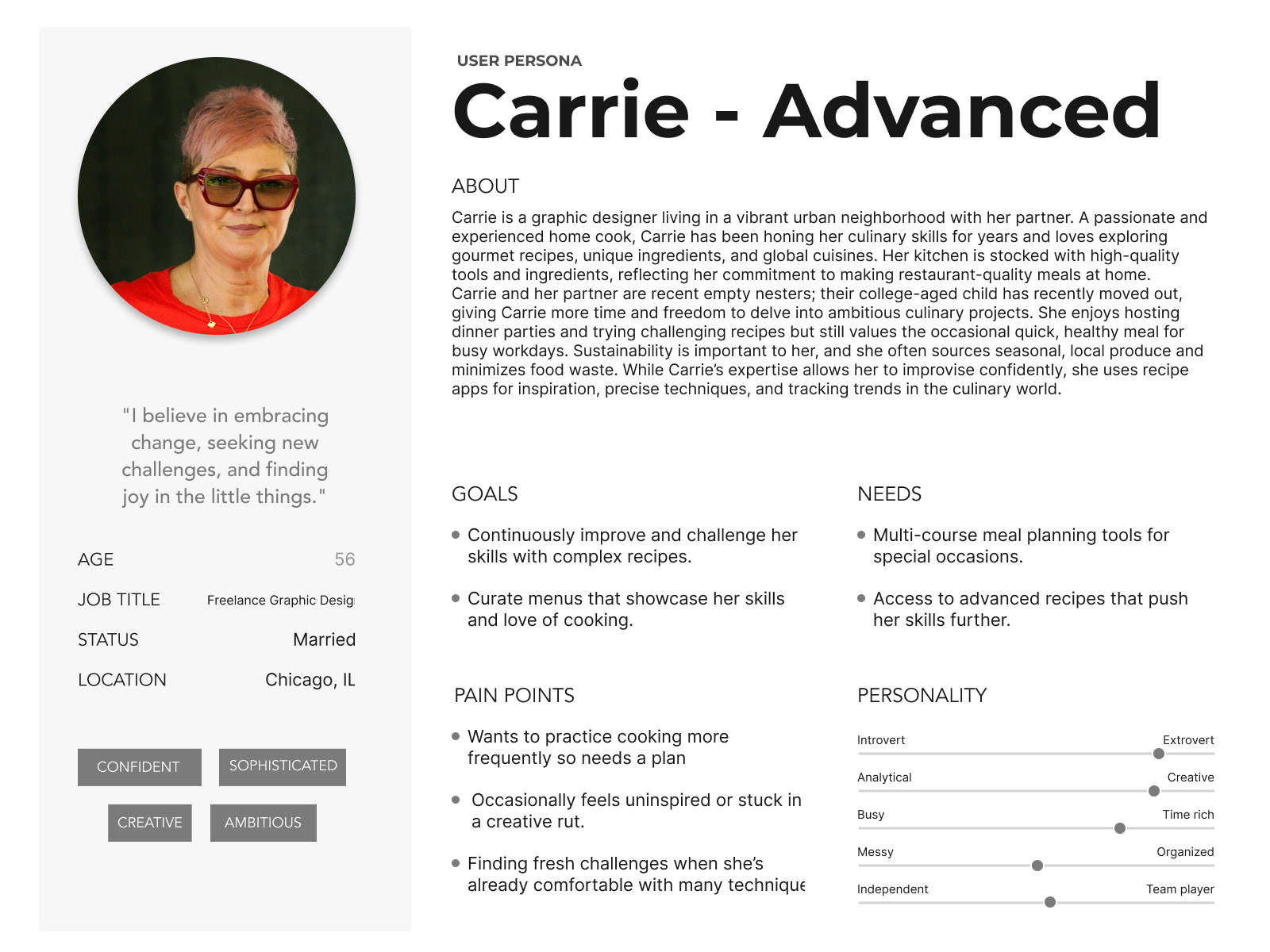
Represents three key user types:
Jacey – novice cook with a busy schedule
Nick – intermediate cook balancing family and creativity
Carrie – advanced cook seeking inspiration and challenges
PERSONAS CONCLUSION
- Made personas to understand different user needs and behaviors
- Used interview and survey data like cooking habits and goals
- Included age, job, pain points, and motivations
- Helped guide design decisions and feature choices
- Referred to them throughout wireframing, prototyping, and testing
WIRE FRAME SKETCHES
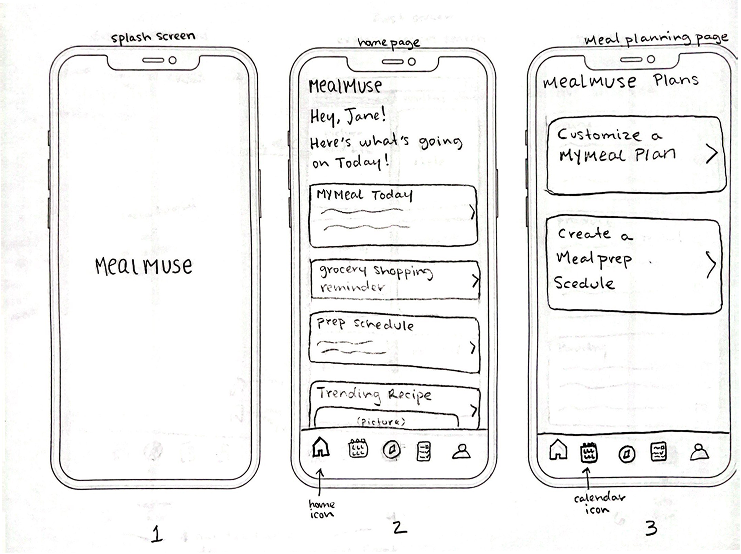
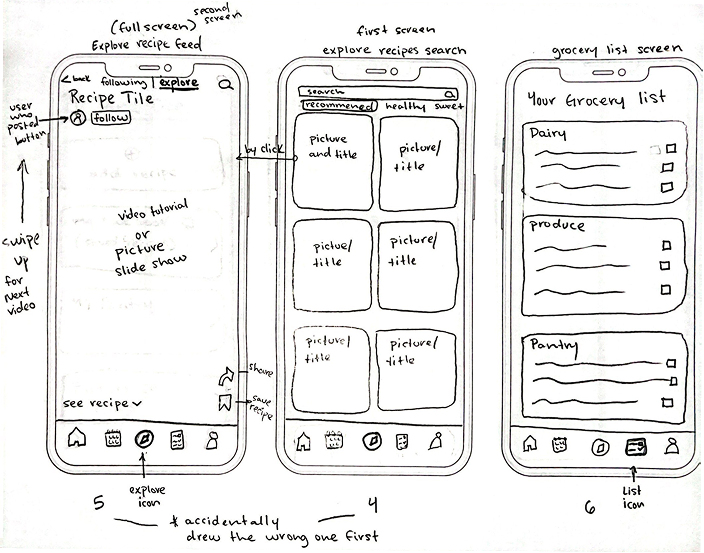
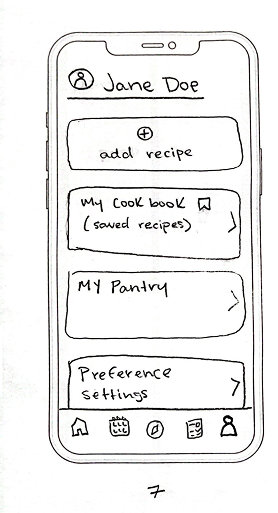
Profile Page
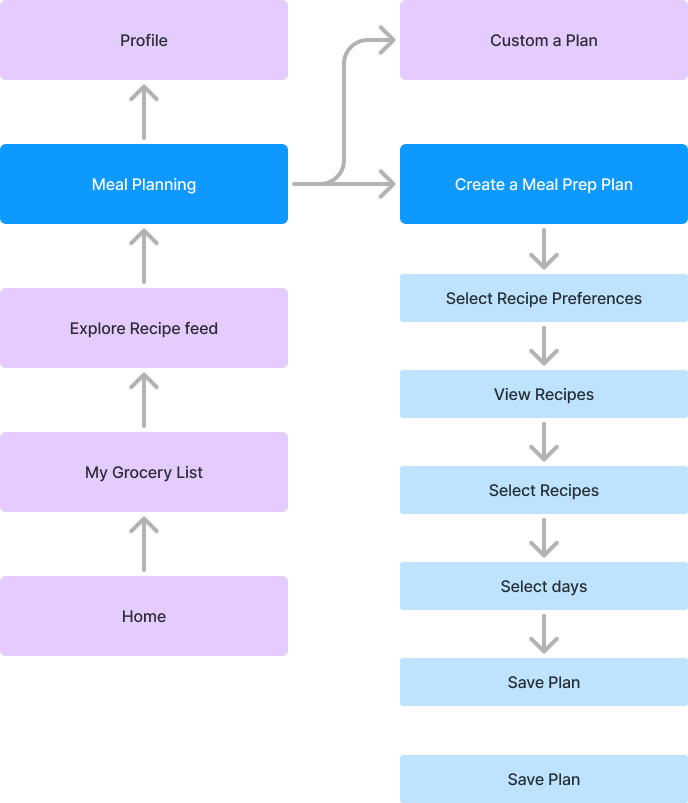
ORIGINAL USER FLOW
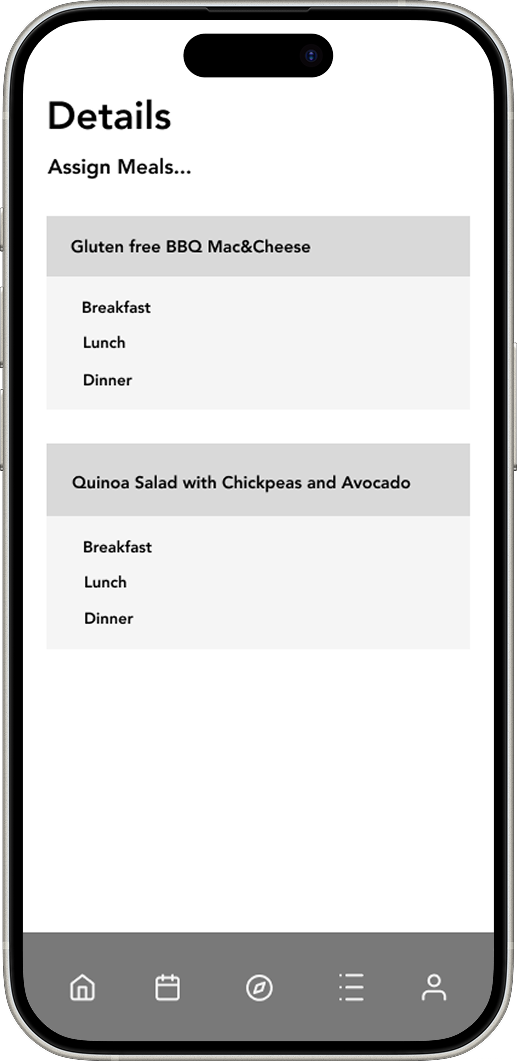
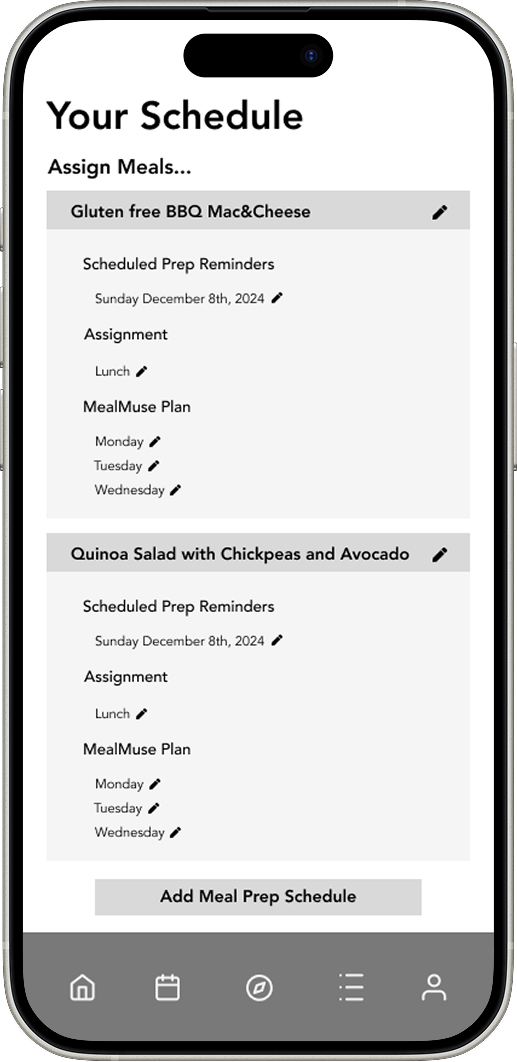
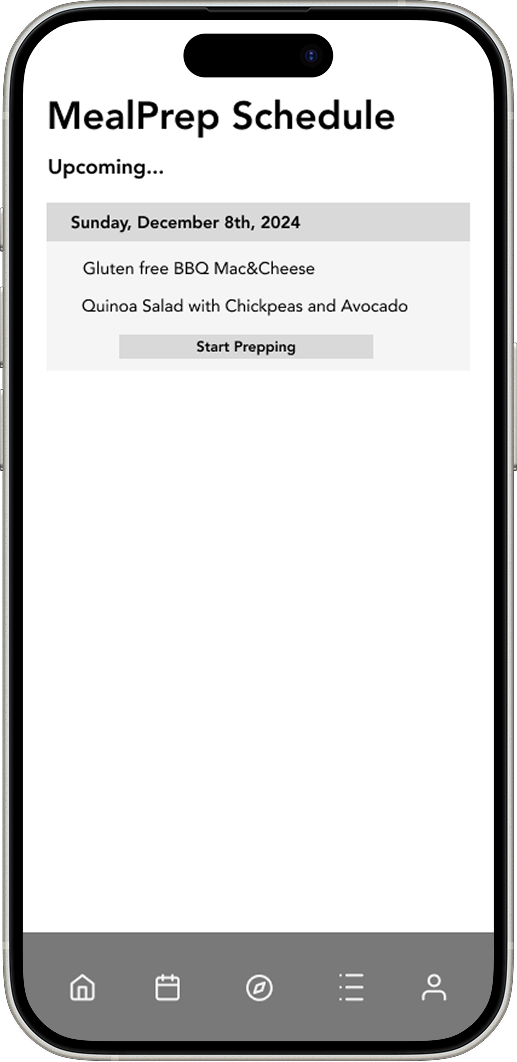
Low Fidelity Wireframes
Based on Original user flow
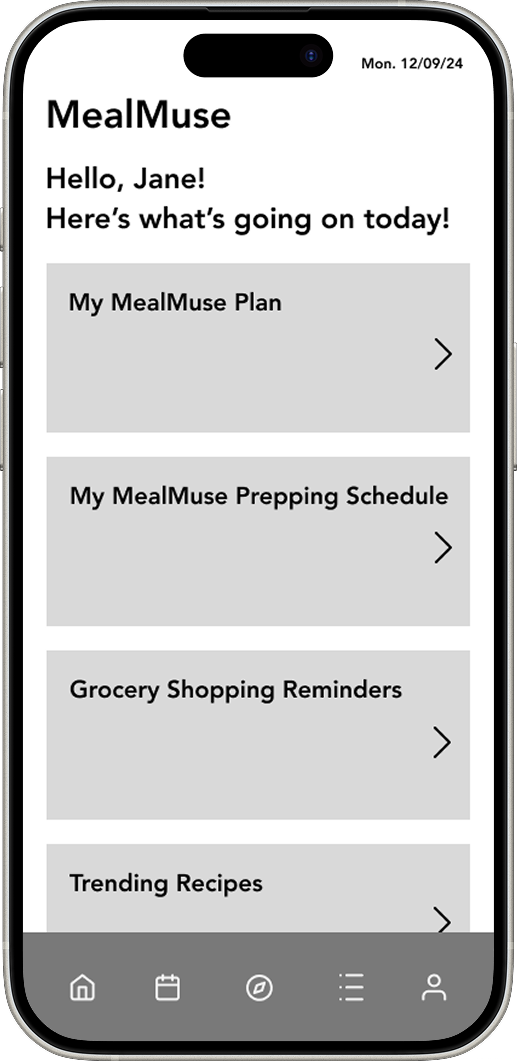
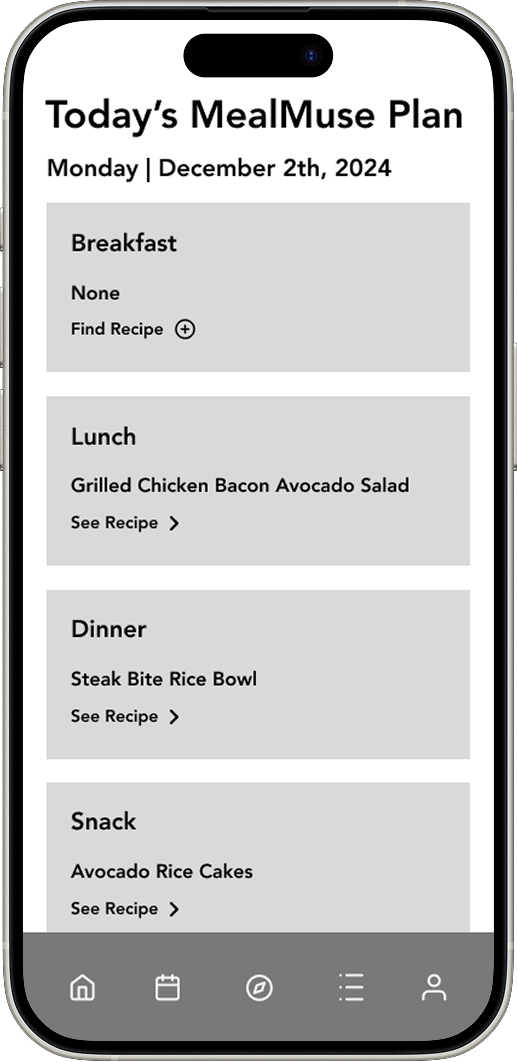
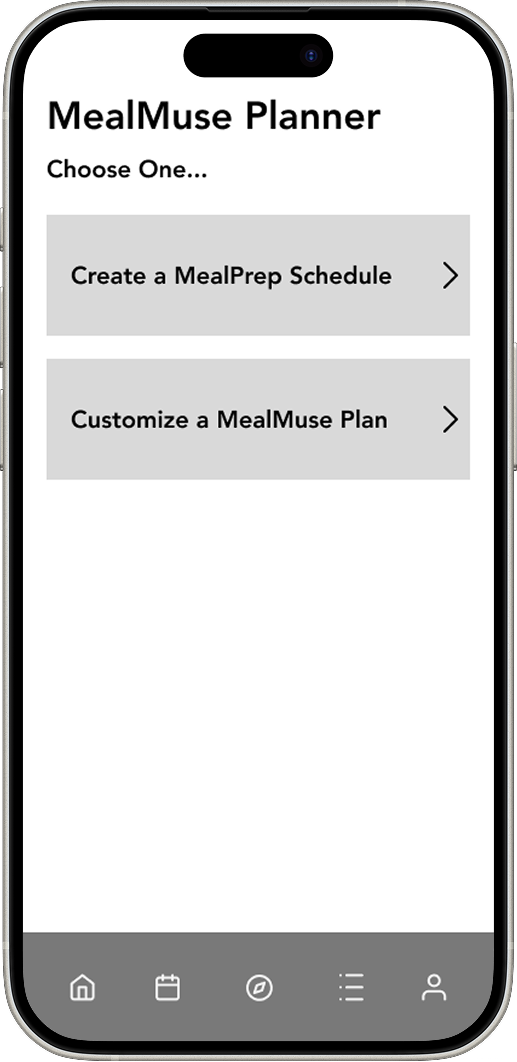
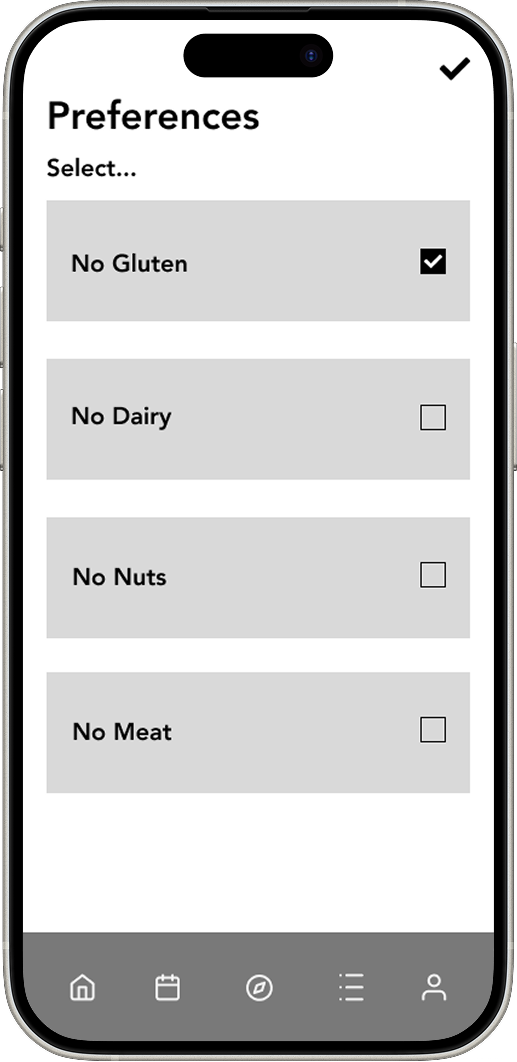
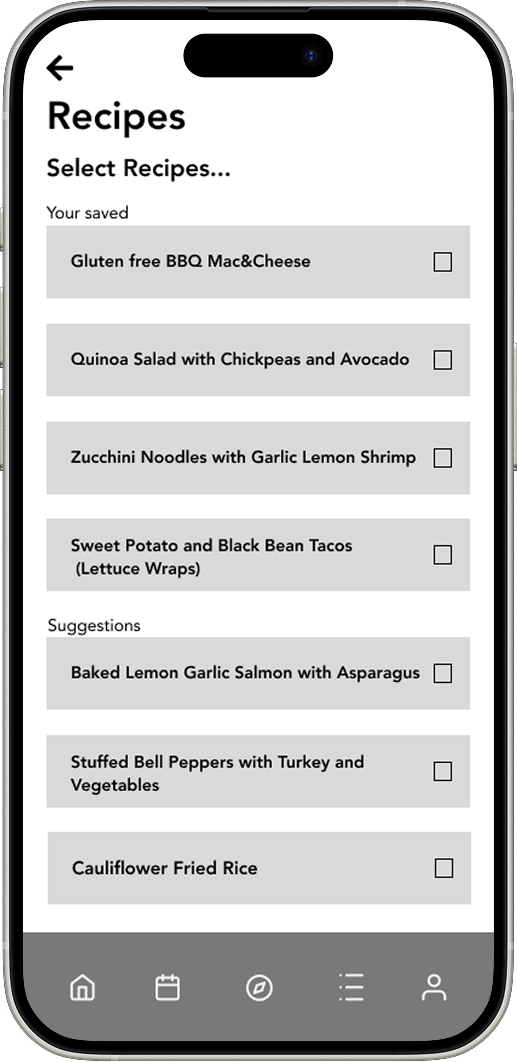
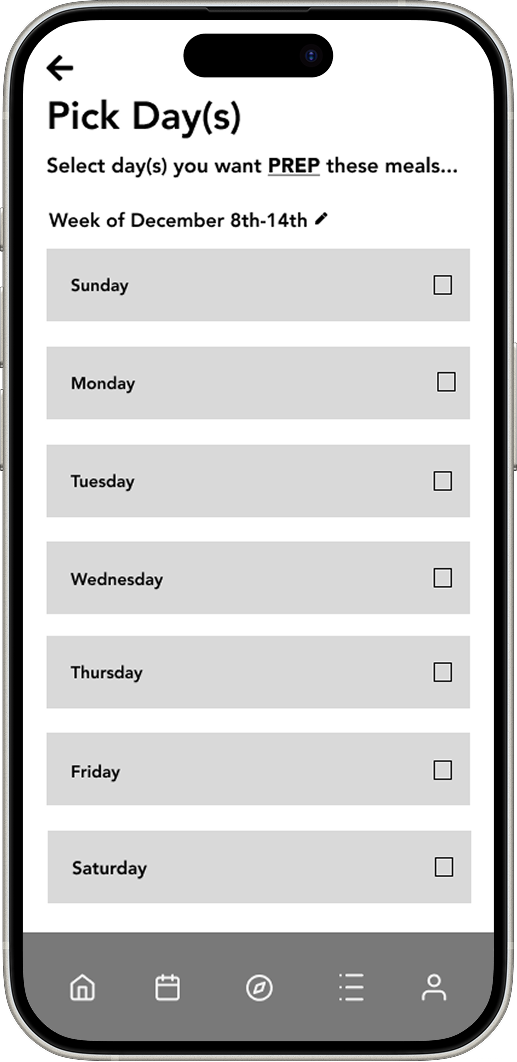
User testing on wireframes
Conducted user testing using the wireframes and a prototype created in Figma.
The Results
Pain points:
- Users had trouble navigating the main menu during usability testing.
- Confusion caused by vague button labels.
- Led to hesitation and slower app interaction.
Solution:
- Revised button labels to be more specific and intuitive.
- Iterated on wording and layout for clarity.
- Retested with a user—navigation was noticeably smoother.
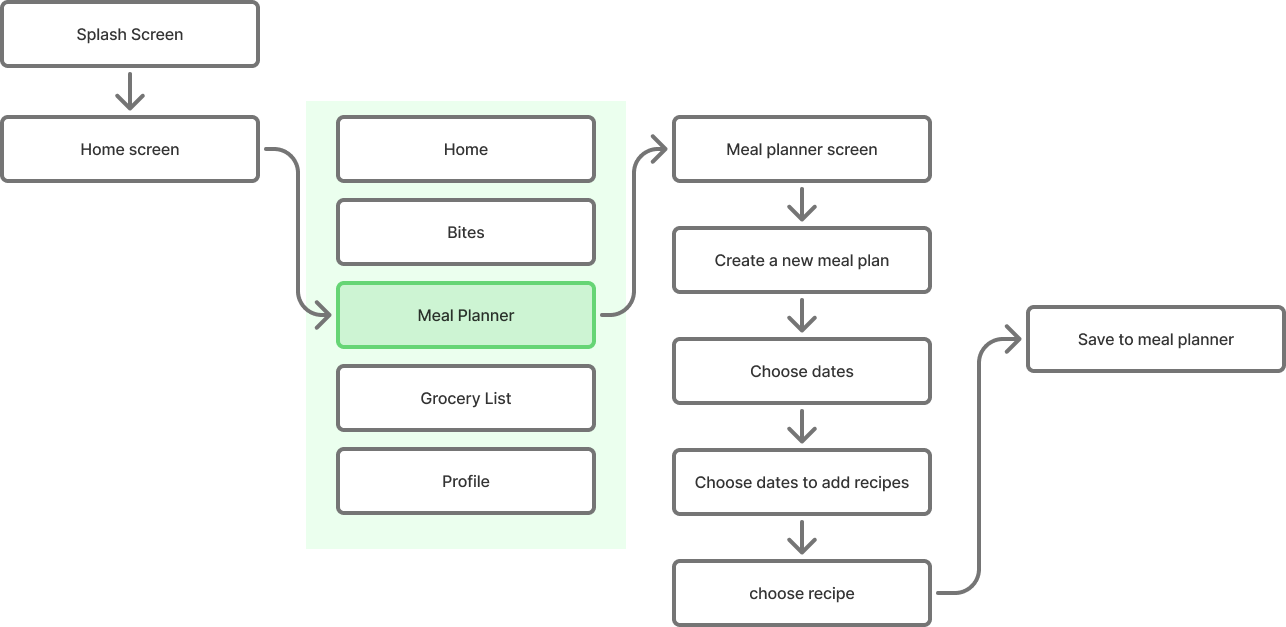
Revised User Flow
change: the dates are now available to choose before is recipes are chosen.
UI Design